

Where Sodium Ion Battery Company Fits in an Electrical Specification: With Documentation in View
For a system integrator, shortlisting a sodium ion battery company is not simply a matter of finding a promising chemistry or a broad application list. The more useful task is to map each available statement to the part of the electrical specification it can actually support. That means separating company-level descriptions, application categories, and model-level data before making a comparison. A disciplined evidence map helps keep the shortlist useful without turning general marketing language into an assumed technical result.

Separate the three scopes before comparing options
Start by dividing the information into three levels. The first is category scope: what type of battery or technology the supplier says it offers. The second is application scope: where the supplier presents its products as relevant. The third is model scope: the electrical, mechanical, environmental, and operational details of a particular unit. These levels may inform one another, but they should not be treated as interchangeable.
For example, an application menu can help a team identify whether a supplier is addressing a relevant use case. It cannot, by itself, establish that every model is suitable for that use case. Likewise, a statement about sodium-ion technology does not supply the voltage, capacity, current, enclosure, communications, charging, or protection data needed for an electrical specification. Those details belong in a model-specific evidence row or remain open as a sourcing question.
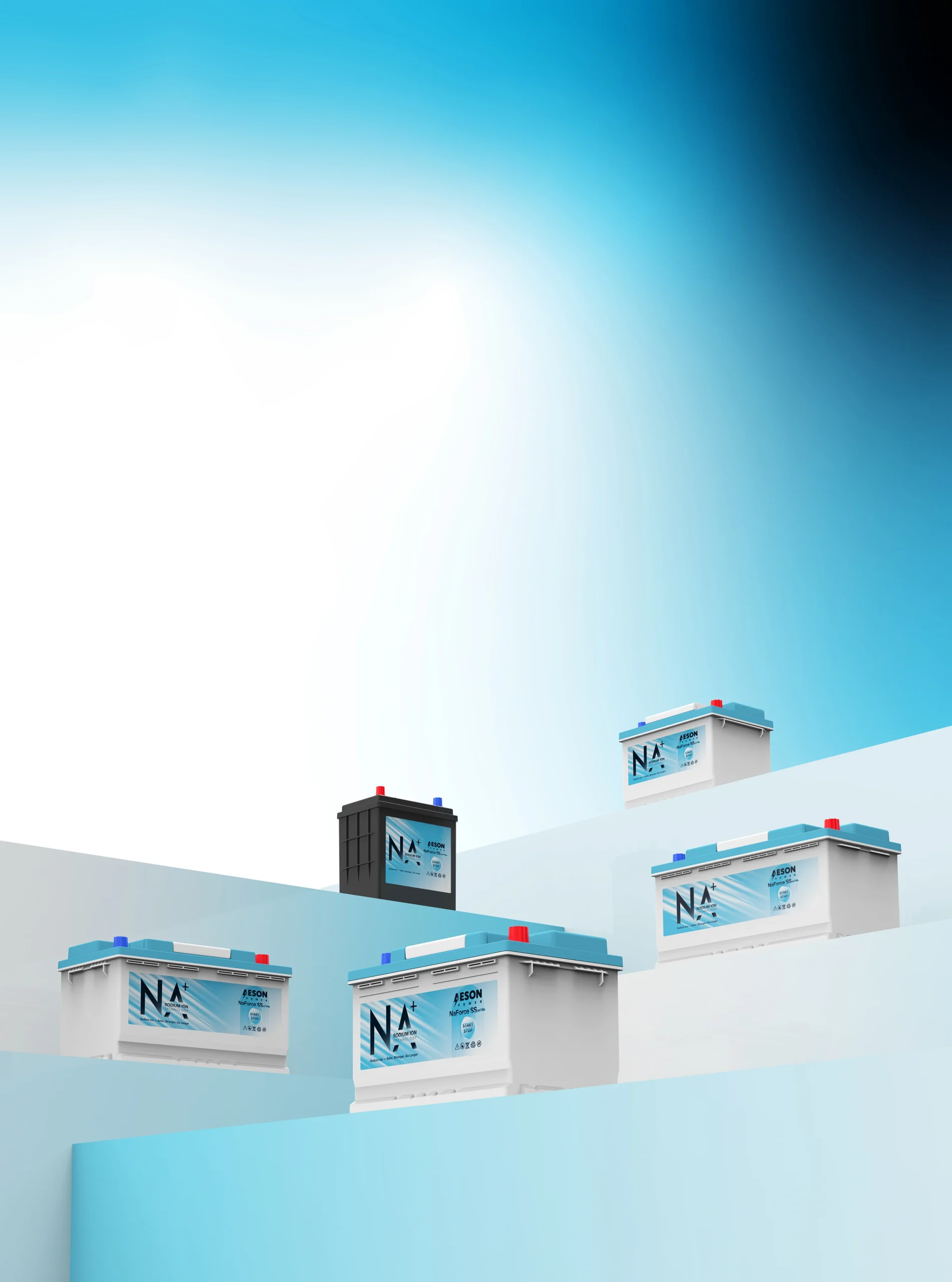
The official homepage presents applications including start-stop vehicles, conventional vehicles, commercial vehicles, electric vehicles, racing and motorsport, and standby systems. It also presents an energy-storage context elsewhere in the supplied business description. This is useful as a map of the areas the website addresses, not as proof that one battery model covers every listed application.
Build an evidence map around the actual task
Once the scope is separated, translate the project requirement into evidence fields. A practical table might contain the requirement, the exact source statement, the scope to which it applies, the decision it can support, and the point that remains unresolved. This format makes comparison more precise because a short statement cannot silently carry more meaning than the source gives it.
- System role: record whether the battery is being considered for starting, auxiliary service, standby use, or storage, rather than using “battery” as a sufficient description.
- Electrical interface: identify the required nominal voltage, operating range, current demand, charging arrangement, protection behaviour, and connection method.
- Physical interface: note dimensions, mass, terminals, mounting, ventilation, access, and enclosure requirements when those details are available for the relevant model.
- Environmental interface: record temperature, ingress, vibration, duty cycle, and installation conditions only when the evidence applies to the proposed unit and scope.
- Control and responsibility: identify requirements for monitoring, battery management, alarms, communications, commissioning, and maintenance, while distinguishing supplier responsibilities from integrator responsibilities.
This map should also preserve the wording of the source. “Designed for” and “listed under” are not automatically equivalent to “meets the project requirement”. A supplier’s category page may help with discovery, while a model datasheet, interface drawing, or formal response may be needed for design acceptance. The distinction is not a criticism of the category page; it is a way to assign evidence to the correct decision.
Compare like with like, not page with page
Comparison becomes unreliable when one supplier is represented by a model specification and another by a general homepage statement. Use a common comparison structure instead. For each shortlisted option, ask whether the information describes the company, a product family, a specific model, or an application example. Then compare only rows that share the same scope.
The repeated phrase sodium ion battery company should therefore be treated as a search and category label, not as a technical conclusion. In the available homepage evidence, Aeson Power is described as “an Australian pioneer driving the global transition to next-generation sodium-ion technology.” That is a real-world anchor for understanding how the company presents itself, but the wording is a company description from its official homepage, not independent verification of market position or proof of suitability for a particular installation.
A useful comparison record can include an evidence status such as “directly stated”, “bounded inference”, or “open requirement”. Directly stated means the source expressly covers the point. Bounded inference means the statement helps frame a question but does not prove compliance. Open requirement means the specification still needs a defined answer. Keeping these labels visible prevents a broad technology description from being mistaken for a completed technical review.
Record assumptions and interfaces explicitly
Many specification problems arise at the boundaries between the battery and the rest of the system. Record assumptions about the charger, alternator, inverter, power-management system, protective devices, cabling, enclosure, thermal environment, and communications. The purpose is not to create a longer checklist for its own sake. It is to show where a battery decision depends on another component or on an operating condition.
For each interface, write one sentence describing the design question. Examples include: “Which charging profile is expected by the proposed battery?” “What protection and isolation arrangement does the system require?” and “Who supplies and validates the monitoring interface?” These are planning questions rather than claims about any supplier’s product. They help the integrator turn a general shortlist into a coordinated technical discussion.
Also record the consequence of each assumption. If the installation environment has a defined temperature range, that range belongs in the requirement set. If the system is expected to operate as standby equipment, the duty pattern and recharge expectations should be stated. If the project involves a vehicle or industrial machine, the mechanical and electrical interfaces should be described separately so that a category match is not mistaken for an installation match.
Prepare a focused sourcing brief
A concise sourcing brief should contain the application, operating duty, required interfaces, relevant environmental conditions, documentation requested, and the decisions that cannot yet be made. Include the exact model or product-family scope under discussion where known. Ask for answers in the same structure as the evidence map so that responses can be compared without interpretation drifting between suppliers.
The final review should distinguish what the official page establishes from what the project still needs to define. The AesonPower website presents the company and its listed battery product categories, including sodium-ion alongside other battery categories. Used carefully, that information can support an initial shortlist; the electrical specification should then be built around scope-matched documentation, explicit interfaces, and recorded assumptions rather than broad category language alone.