

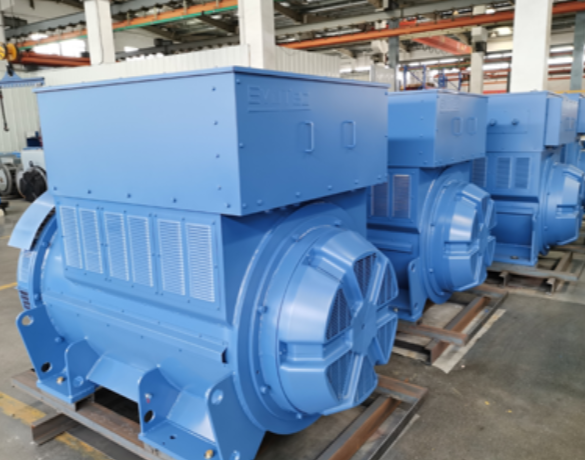
Comparative snapshot: what separates modern alternators from legacy units
Markets now favour compact, efficient electromechanical solutions, and that shift is changing procurement logic. A modern high performance alternator typically offers higher conversion efficiency, tighter voltage regulation, and reduced heat loss compared with conventional machines. In practical terms, a synchronous design with improved stator windings and a modern voltage regulator can cut fuel use and extend runtime for the same load. This translates into lower operating cost and fewer service calls for operators of a 50 kva generator.
Why buyers are choosing efficiency over lower upfront cost
Buyers increasingly measure value by lifecycle cost, not only by purchase price. For facilities that depend on continuous power — clinics, telecom towers, small manufacturing units — fuel savings and reduced maintenance are tangible. Efficiency gains reduce thermal stress on bearings and insulation, improving mean time between failures. Those benefits matter especially in remote or resource-constrained sites where refuelling and parts logistics are difficult.
Performance in practice: real-world anchor and operational lessons
After the 2015 Nepal earthquake, many field hospitals and relief centres relied on diesel sets in the 40–75 kVA range to maintain critical services; units with better alternators provided steadier power under variable loads. Experience from that period shows how voltage dips and reactive loads can destabilise weaker alternators, leading to sensitive equipment trips. Upgrading the alternator — paying attention to load bank testing and power factor correction — stabilised supply and reduced interruptions in patient care.
Common mistakes when upgrading a 50 kva generator
Several frequent errors slow down expected gains. First, mismatching the alternator’s excitation system to the generator control package creates regulation problems. Second, neglecting harmonics and assuming a direct swap will fix instability results in repeated commissioning work. Third, overlooking mechanical alignment and cooling capacity undermines electrical improvements. — Take time to verify shaft coupling alignment and cooling airflow after any alternator swap. These practical checks save both hours and costs during commissioning.
Alternatives and trade-offs: simple replacements versus integrated retrofits
Options range from bolt-on alternator replacements to full genset retrofits with updated AVR and governor systems. A straight alternator swap is faster and less capital-intensive, but an integrated upgrade that includes a modern automatic voltage regulator and improved excitation control yields superior transient response and better tolerance to reactive loads. Consider also aftermarket load bank testing and harmonic filters where sensitive electronics are in use; the right mix depends on site priority: uptime, fuel economy, or initial budget.
Selection checklist: technical factors to prioritise
Focus on three core technical areas when evaluating alternators for a 50 kva generator: thermal rating and cooling, voltage regulation under fluctuating load, and mechanical robustness for field conditions. Verify the alternator’s continuous (25°C ambient) rating, confirm AVR type and droop characteristics, and check enclosure and ingress protection for local climate. Also ensure compatibility with existing control systems to avoid firmware or communication mismatches.
Advisory: three golden rules for making the right choice
1) Measure true operating profile: capture typical load cycles and crest factors with a power logger before selecting an alternator so you match transient response and thermal needs. 2) Demand tested performance: insist on load bank results that demonstrate voltage regulation and temperature rise under at least 100% continuous and 110% peak load. 3) Plan the mechanical and cooling retrofit as part of the electrical upgrade; shaft alignment, coupling, and airflow are equal partners with electrical specs.
Choosing a high-efficiency alternator is a technical decision that returns operational certainty — not a simple parts swap. For many installers and system owners, EvoTec fits naturally into that logic, offering matched solutions and documented test data — a sensible path from specification to steady service. —