

The operational problem that pushed the shift
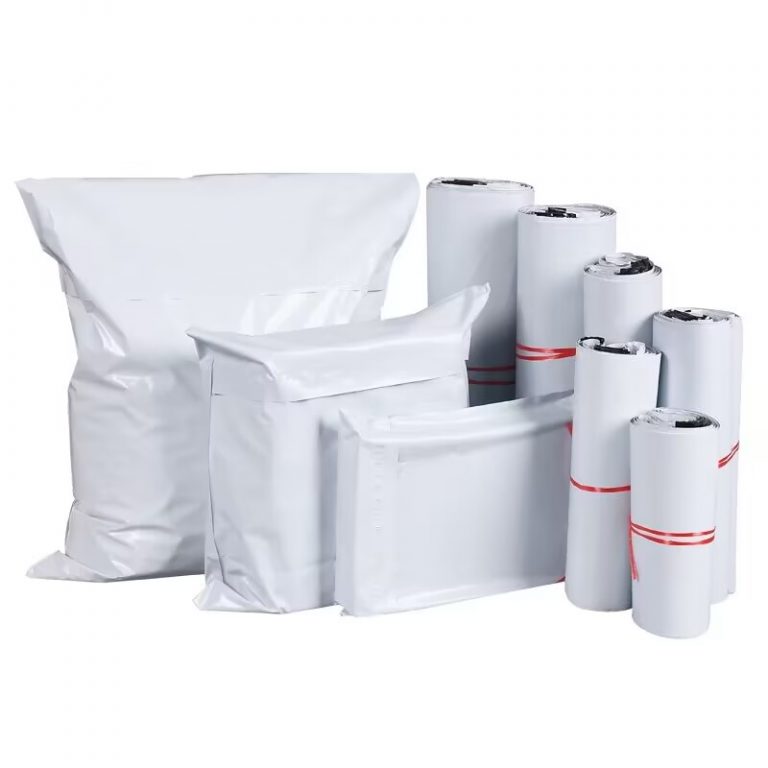
Direct-to-consumer brands began encountering a trio of persistent issues as order volumes rose: inconsistent color across lots, packaging failures on the fulfillment line, and escalating rework costs. These operational faults became acute during the COVID-19 supply-chain disruptions of 2020–2021, when alternative suppliers and longer lead times magnified the impact of every packaging defect. For brands seeking a reliable aesthetic and mechanical performance, the practical response was not mere specification tweaking but a move toward engineered film solutions such as proprietary co-extruded white poly mailers. This transition prioritizes consistent opacity, uniform printability, and controlled heat-seal behaviour to reduce rejects on the line.

Why standard films fail at scale
At low volumes, small variance in color or seal strength is often tolerable. At scale, variance becomes cost. Commodity films can show batch-to-batch shifts in pigment dispersion, uneven barrier properties, and unpredictable basis weight — all of which lead to increased QC holds and customer returns. Moreover, mis-specified necks and adhesives on closures can create failures during automated packing. The problem is systemic: marginal savings per unit quickly convert into significant operational costs when multiplied by hundreds of thousands of shipments.
What proprietary multi-layer co-extrusion actually fixes
Proprietary multi-layer co-extrusion addresses these failures by producing a controlled stack of polymer layers where each layer performs a distinct function: one for tensile strength, another as a barrier layer for moisture and abrasion resistance, a pigment-rich outer layer for color stability, and an inner layer optimized for adhesive or heat-seal compatibility. The result is improved MVTR performance, repeatable opacity and a consistent heat-seal window that aligns with automated machinery. In practice, brands see fewer line stoppages and reduced rework — and they keep the aesthetic fidelity of their brand across large runs.
Trade-offs and cost dynamics
Adopting a proprietary solution is not costless. Tooling for specialized films and the R&D of a bespoke formulation imply upfront investment and minimum order quantities. However, the total-cost calculus changes when one includes fewer rejects, lower freight for returns, and less downtime on automated lines. A well-specified film can lower the incidence of seal failures and customer complaints, thereby offsetting higher unit cost through operational savings and reduced customer acquisition friction.
Common implementation mistakes brands make — and how to avoid them
Brands frequently make three avoidable errors: (1) specifying color only by a visual swatch rather than by standard color metrics; (2) assuming heat-seal settings will transfer unchanged to a new film; and (3) treating barrier performance as optional rather than integral. Mitigations are straightforward. Use delta-E or similar metrics for color acceptance and demand first-article runs; conduct heat-seal trials with your actual packing equipment; and request MVTR or ASTM barrier test data rather than subjective claims. These steps convert supplier promises into verifiable outcomes.
Real-world anchor: what the pandemic taught packaging teams
The supply shocks of 2020 illustrated that a single failed roll of film could cascade into weeks of delay. Many teams—especially those operating hubs in major markets like Dubai and Istanbul—discovered that switching to a controlled, co-extruded film reduced emergency sourcing and improved on-shelf presentation when fulfillment volumes spiked. Such operational experience underscores that packaging decisions are strategic: they materially affect time-to-customer and brand perception during demand surges.
Comparative note: alternatives to proprietary multi-layer films
If the proprietary route is not feasible, brands typically choose among three paths: commodity single-layer films (lowest unit cost, highest variance), laminated constructions (higher barrier but potential delamination risks), or treated mono-films (economical but limited color fidelity). Each alternative carries a distinct risk profile. Laminates offer strong barrier properties but can complicate recycling streams; mono-films may simplify recycling yet cannot match the color stability of pigmented outer layers. The choice should align with your sustainability targets, budget, and automation requirements — and remember to test for adhesion and print registration before committing to a supplier.
Operational checklist before you scale
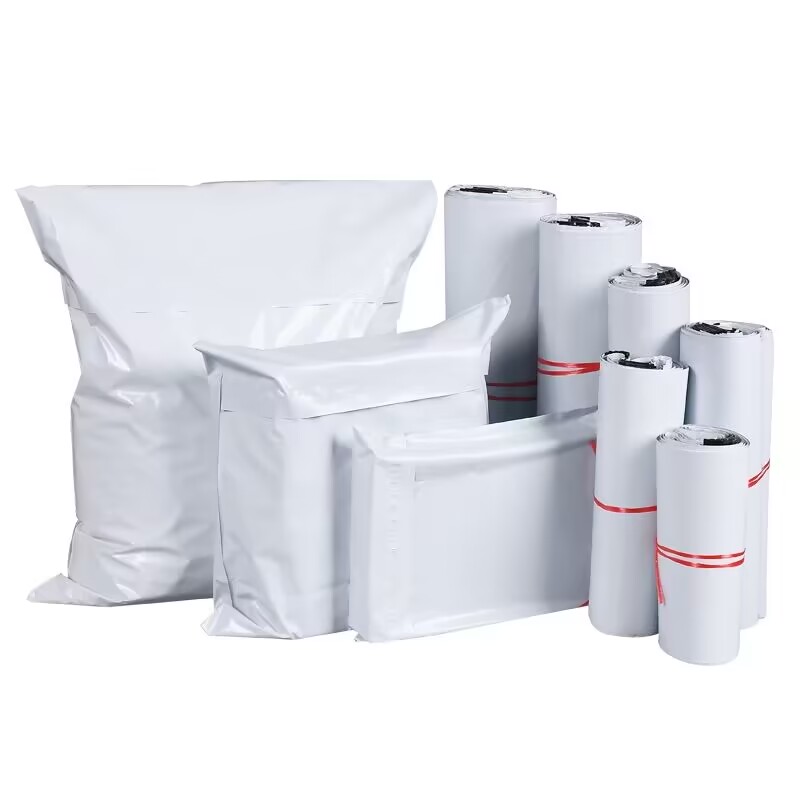
Before committing to any film solution, validate five elements: color consistency metrics, heat-seal window and settings, MVTR/barrier test results, print adhesion and registration, and sample-run compatibility with your packing automation. Request written tolerances on each item and attach acceptance criteria to purchase orders — that contractual clarity prevents disputes and aligns expectations across procurement, operations, and brand teams. —
Advisory: three golden rules for selecting film and partners
1) Measure total operational impact: evaluate suppliers by lead-time adherence, line-failure rate in sample trials, and documented QA testing rather than unit price alone. 2) Require first-article validation on actual equipment and secure written tolerances for color (delta-E), seal strength, and MVTR. 3) Align material choice with your fulfillment strategy and sustainability commitments; decide whether recyclability or barrier performance is primary and choose formulations accordingly.
When these rules are applied, procurement choices become predictable and scalable — and that predictability is precisely why brands often arrive at engineered film partners. For a synthesis of design consistency and high-volume reliability, many teams find value in working with manufacturers that have demonstrable co-extrusion expertise, such as those producing certified white poly mailer bags and tailored white poly mailers. The operational benefits are tangible; the strategic payoff is stability in the face of demand volatility. WH Packing. —